98.2% purity
 View Details
Swisschem
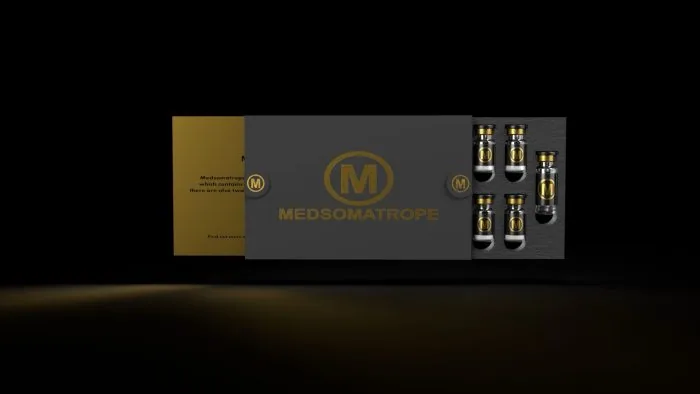
Fact sheet for Medsomatrope: A lab-tested performance compound with a verified purity of 98.5% (tested on 2026-03-11). The product contains the active substance Medsomatrope at a concentration of N/A and comes in a size of 1 unit. Recommended for athletes seeking guaranteed chemical purity and exact dosing.
Laboratory Analysis
Medsomatrope is a brand name for a pharmaceutical presentation of recombinant human growth hormone (rhGH), chemically named somatropin. The active substance is a protein molecule produced by genetic e...
Medsomatrope is a brand name for a pharmaceutical presentation of recombinant human growth hormone (rhGH), chemically named somatropin. The active substance is a protein molecule produced by genetic engineering, with an amino acid sequence identical to the naturally occurring growth hormone produced by the anterior lobe of the pituitary gland. The polypeptide chain consists of 191 amino acids, has two intramolecular disulfide bridges and a molecular weight of approximately 22 kilodaltons. The hormone is produced by expression of the rhGH gene in bacterial or mammalian cell systems, after which the protein is purified and freeze-dried into a form ready for injection.
Generic somatropin preparations, of which Medsomatrope is an example, came on the market after the basic patent for recombinant growth hormone expired. The originals — Genentech's Protropin (approved in 1985), Eli Lilly's Humatrope (1987), Pharmacia's Genotropin, and Novo Nordisk's Norditropin — established quality standards and pharmacopoeial specifications that subsequent generic manufacturers must live up to. Activity is measured in international units (IU), where 1 mg of purified somatropin corresponds to approximately 3 IU. The biochemical identity is confirmed by peptide mapping, mass spectrometry and bioassays for confirmation of the tertiary structure.
The approved clinical indications for somatropin include deficiency conditions in children — idiopathic growth hormone deficiency, Turner syndrome, Noonan syndrome, Prader-Willi syndrome, short stature associated with chronic renal failure or small-for-gestational-age — as well as adult growth hormone deficiency secondary to pituitary pathology after surgery or radiation, or caused by Sheehan syndrome.
After subcutaneous injection, somatropin is absorbed from the injection depot into the blood, with a bioavailability of around 70–80 percent and a plasma half-life of 2–4 hours. However, the biological half-life is significantly longer because the hormone primarily acts by inducing the formation of a secondary messenger hormone, IGF-1, whose serum levels persist significantly longer than the administered somatropin.
At the cellular level, somatropin binds to the growth hormone receptor (GHR), a transmembrane protein receptor expressed on most tissues but in highest density in the liver. The binding triggers dimerization of two receptor molecules, which activates the intracellular kinase JAK2. JAK2 phosphorylates the transcription factor STAT5b, which translocates to the cell nucleus and directs the transcription of target sequences — of which the IGF-1 gene is central. The liver is the major producer of circulating IGF-1, but muscle, cartilage and bone locally produce IGF-1 which contributes to the paracrine effects.
Somatropin also exerts direct effects that are not mediated via IGF-1. The hormone is lipolytic — it stimulates the breakdown of triglycerides in adipose tissue via activation of hormone-sensitive lipase. Glucose metabolism is directly affected because somatropin is insulin-antagonistic and can raise blood sugar with heavy exogenous administration. The diabetogenic profile is central to the risk picture during prolonged treatment and explains why control of glucose metabolism is one of the mandatory follow-up parameters.
Because Medsomatrope contains the same active substance as other somatropin preparations, its physiological effect corresponds entirely to that of rhGH as a class. In the available pharmacological literature, there are several systems where the substance leaves a clear imprint:
The side effect profile of somatropin is well established from decades of clinical use in growth hormone deficiency and has been extensively documented in epidemiological studies. The profile is dose-dependent — at replacement doses in GH-deficient patients adverse effects are relatively rare, but at supraphysiological doses the risk of several of the reactions described below rises markedly. For generic preparations, possible variation in excipients and stabilizers between manufacturers is added, which in rare cases can affect local reactions at the injection site.
The overall side effect picture of Medsomatrope — fluid retention, glucose metabolic impact, IGF-1-mediated structural effects and theoretical tumor-related risk — means that clinical use requires close medical follow-up with laboratory controls (IGF-1, fasting glucose, HbA1c, thyroid function) and an individual assessment of the risk-benefit balance.
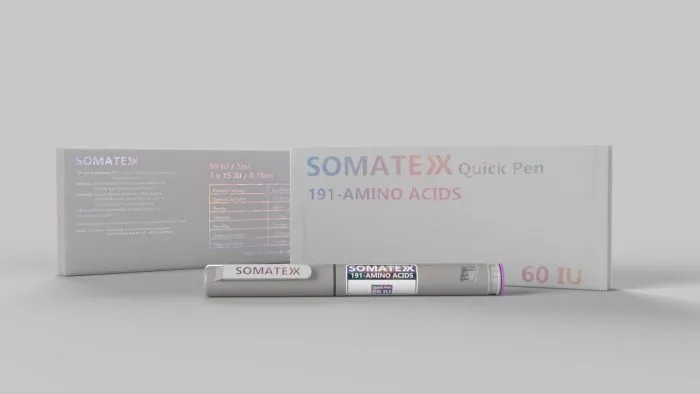
Medsomatrope is a pharmaceutical-produced recombinant growth hormone (rHGH) with a complete 191-amino acid sequence, identical to the body's own somatropin. The product is characterized by high purity, stable active substance concentration and reliable biological activity in each vial. Users particularly appreciate Medsomatrope for anti-aging effects, faster recovery, improved body composition, and stronger tendons and ligaments. The professional packaging and quality control make it a reliable option for demanding users. Suitable for both sporting goals and general vitality regimens.
| Active Substance | Medsomatrope |
|---|---|
| Concentration | N/A |
| Packaging | 1 unit |
| Dosage Form | Lyophilized powder (reconstituted for SC) |
| Measured purity: | 98.5% (2026-03-11) |
| Batch Reference | B-MEDSO-7F07-2026 |
Human growth hormone (HGH), or somatropin, is a peptide hormone that governs growth, recovery and metabolism. It is valued for improving body composition, skin quality, sleep and tendon and joint health over time.
HGH stimulates the liver to produce IGF-1, which drives cell and muscle growth as well as fat burning (lipolysis). Its effects build gradually, improving recovery, leaner body composition and better tissue quality.
Reconstitution, Storage & Synergy Protocol for Medsomatrope
Medsomatrope (Medsomatrope, N/A, 1 unit) carries a verified HPLC purity of 98.5% (batch B-MEDSO-7F07-2026). Lyophilized peptides including BPC-157, TB-500, CJC-1295, Ipamorelin, Melanotan 2, Semaglutide, Tirzepatide and Retatrutide are gently reconstituted with 1–2 ml of bacteriostatic water (BAC water) along the inner vial wall without shaking, then stored refrigerated at 2–8 °C. Peptides and Somatropin HGH do not suppress natural testosterone and require no PCT.
Calculate solution concentration and exact U-100 syringe units.
Peptides are shipped as freeze-dried powder for stability. They must be stored in the refrigerator and gently reconstituted with bacteriostatic water without shaking the vial.
No, peptides work through different pathways (such as growth hormone release or tissue repair) and do not suppress the HPTA axis. No PCT is required for standalone peptide cycles.
Our peptides undergo lab testing to ensure a chemical purity of over 98%, which is crucial since peptides are injected subcutaneously and must be free of raw synthesis residues.
View Details  View Details
 View Details
 View Details